


Our Flagship Program, renowned for it's Sound Pedagogical Principles

The Most Comprehensive Test Series Program with Classroom Analysis

Our Flagship Program, renowned for it's Sound Pedagogical Principles.
The Institute was founded by Mr. S. S. Rautela in the year of 2000, as an independent body with a view to establish a bench -mark Academy to achieve excellence in the country toughest competitive exam .i.e. IAS, PCS and other exams. Over the period, the Academy has evolved into a perfect fraternity of scholar and students to achieve a single goal.
The Academy is constantly make itself update with new changes and target its ultimate destination. The faculty of the Academy is well experienced, competent and dedicated researchers.

The Civil Services Main examination is designed to test the academic talent of the aspirant, also his/her ability to present his/ her knowledge in a clear and coherent manner. The scope of the syllabus of General Studies is of degree level.
Read More
Public Administration, the most popular subject, can be finished in 4-5 months and every subsequent revision would take about 11/2 months with lots of updation, revision and retention in the applied aspects.
Read More
The classes will be held for the following subjects (for both Offline & Live Online Classes): CPC, CR.P.C, EVIDENCE, CONSTITUTIONAL LAW, ADMINISTRATIVE LAW & INDIAN POLITY, IPC, FAMILY LAW, SPECIFIC RELIEF ACT, LIMITATION ACT, LAW OF TORT, JURISPRUDENCE...
Read More
Giving you a brief idea of the UK APO/UP APO syllabus, it is evident that your Law knowledge, GK, and Hindi knowledge shall be tested. Lastly, the candidates who will qualify both the stages of the UPPSC APO exam shall be called to appear for an interview.
Read More
The SSC Exams stand for Staff Selection Commission exams. are conducted to recruit staff to various posts in ministries, departments and organizations of the Government of India.
Read More
The Combined Defence Services Examination (abbreviated as CDS Exam) is conducted by the Union Public Service Commission for recruitment of Commissioned Officers in the Indian Military Academy, Officers Training Academy.
Read More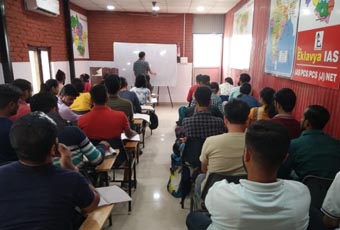
This is in contrast to achievement tests which are subject based, and that assess a student's learned skills and knowledge. Abilities tests and achievement tests complement each other, and shed light on different aspects of a student's capabilities.
Read More
Bank PO stands for Bank Probationary Officer. It is a managerial level post which is offered in different Public Sector Banks. There are certain eligibility criteria which have to be met in order to appear for a Bank PO exam.
Read MoreIf you become an IAS officer, you become the part of the Indian Administrative Service a dream job for Indian Youth. You will be part of the Govt. who play an important role in policy implementation. You can work from outside and inside and change the whole system for the betterment of the life of common people. If you have a dream for India believe that India will soon be a super-power with the help of you like ias officers. If you want to be part of the process of making India a great nation, IAS is for you. Being an IAS officer, there is a lot of opportunity and power to control the system, so that you can be part of Emerging India. Besides that, IAS is a great career option which avail you different opportunity for work. You get many perks of the job when you are as an IAS officer. You will have job security with dignity and social respect along with feeling of nations building and making India as a great nation in the world.
 01
01Our ClassesPrelims, Mains and Interview Classes Conducted simultaneously from monday to saturday.
 02
02
Debate and DiscussionDebate and Discussion Class, conducted for Personality improvement and Communication skills.
 03
03
Analytical approachClass work is based on analytical approach, observation, evaluation and decision conclusion.
 04
04Basic ConceptsTo Command basic concepts on different subjects NCERT learning work been managed.
 05
05
Weekly TestWeekly Test for prelims , mains been managed along with correction work.
 06
06
Knowledge empower Knowledge empowering work been judged by government schemes / programs, current issues, present social problems and solution merits.
We have trained the IAS aspirants from various states of India such as Kerala, Andhra Pradesh, Telangana, Karnataka, West Bengal, Assam, Manipur, Meghalaya, Bihar, Jharkhand, Uttarakhand, Uttar Pradesh, Delhi, Haryana, Himachal Pradesh, Punjab, Jammu & Kashmir etc.
Interview Guidance Programme-2023-2024 (New)
Online Test Series-2023-2024
Article 35A of the Indian Constitution is an article that allows the Jammu and Kashmir state's legislature to define “permanent resident” of the state. It was added to the Constitution through a situationary Presidential Order, i.e., The Constitution (Application to Jammu and Kashmir) Order, 1954 – issued by the President of India on 14 May 1954, exercising the powers conferred by the clause (1) of the Article 370 of the Indian Constitution, and with the concurrence of the Government of the State of Jammu and Kashmir.
Prior to 1947, Jammu and Kashmir was a princely state under the British Paramountcy. The people of the princely states were "state subjects", not British colonial subjects. In the case of Jammu and Kashmir, the political movements in the state in the early 20th century led to the emergence of "hereditary state subject" as a political identity for the State's people. In particular, the Pandit community had launched a "Kashmir for the Kashmiri" movement demanding that only Kashmiris should be employed in state government jobs. Legal provisions for the recognition of the status were enacted by the Maharaja of Jammu and Kashmir between 1912 and 1932. The 1927 Hereditary State Subject Order granted to the state subjects the right to government office and the right to land use and ownership, which were not available to non-state subjects.
Following the accession of Jammu and Kashmir to the Indian Union on 26 October 1947, The Maharaja ceded control over defence, external affairs and communications (the 'ceded subjects') to the Government of India . The Article 370 of the Constitution of India and the concomitant Constitutional Order of 1950 formalised this relationship. Discussions for furthering the relationship between the State and the Union continued, culminating in the 1952 Delhi Agreement, whereby the governments of the State and the Union agreed that Indian citizenship would be extended to all the residents of the state but the state would be empowered to legislate over the rights and privileges of the state subjects, who would now be called permanent residents.
In his statement to the Lok Sabha on the Delhi agreement, Nehru has said:
The question of citizenship arose obviously. Full citizenship applies there. But our friends from Kashmir were very apprehensive about one or two matters. For a long time past, in the Maharaja's time, there had been laws there preventing any outsider, that is, any person from outside Kashmir, from acquiring or holding land in Kashmir. If I mention it, in the old days the Maharaja was very much afraid of a large number of Englishmen coming and settling down there, because the climate is delectable, and acquiring property.
So although most of their rights were taken away from the Maharaja under the British rule, the Maharaja stuck to this that nobody from outside should acquire land there. And that continues. So the present Government of Kashmir is very anxious to preserve that right because they are afraid, and I think rightly afraid, that Kashmir would be overrun by people whose sole qualification might be the possession of too much money and nothing else, who might buy up, and get the delectable places. Now they want to vary the old Maharaja’s laws to liberalise it, but nevertheless to have checks on the acquisition of lands by persons from outside. However, we agree that this should be cleared up. The old state’s subjects definition gave certain privileges regarding this acquisition of land, the services, and other minor things, I think, State scholarships and the rest.
So, we agreed and noted this down: 'The State legislature shall have power to define and regulate the rights and privileges of the permanent residents of the State, more especially in regard to the acquisition of immovable property, appointments to services and like matters. Till then the existing State law should apply.
Following the adoption of the provisions of the Delhi Agreement by the Constituent Assembly of Jammu and Kashmir, the President of India issued The Constitution (Application to Jammu and Kashmir) Order, 1954, through which Indian citizenship was extended to the residents of the state, and simultaneously the Article 35A was inserted into the Indian constitution enabling the State legislature to define the privileges of the permanent residents.
Schedule for the Comprehensive Tests
Video Portal Link
CSAT Video Account Validation
Geography Main Test Series 2023-2024
Interview Guidance Programme-2023-2024
Fee & Admission Schedule May-2023-2024 Batch

One Nation One Election Prime Minister Narendra Modi is suggesting one nation one election concept from his first tenure 2014. And so The Prime Minister shri Narendra Modi invited heads of all political parties to a meeting on 19th June, 2019 to discuss the "one nation, one election" thought. The thougt of One Nation One Election is about structuring the Indian election system in a manner such that elections of the lower house (Lok shaba) and the State Assemblies are held together.
Advantages of One Election in IndiaThe concept of ‘One Nation One Election’ can help country to keep a check on the election expenses, parties expenses, other unnecessary expenses etc.
Read More